Introduction
US presidential elections represent a major turning point for global financial markets. While the identity of the winner matters, it is primarily expectations regarding economic and fiscal policies, along with consumer confidence, that directly influence market behavior.
This article analyzes the performance of different financial assets in the two months following presidential elections over the past 40 years and explores the reasons behind these trends.
1. Equities vs Sovereign Bonds: Post-Election Trend Analysis
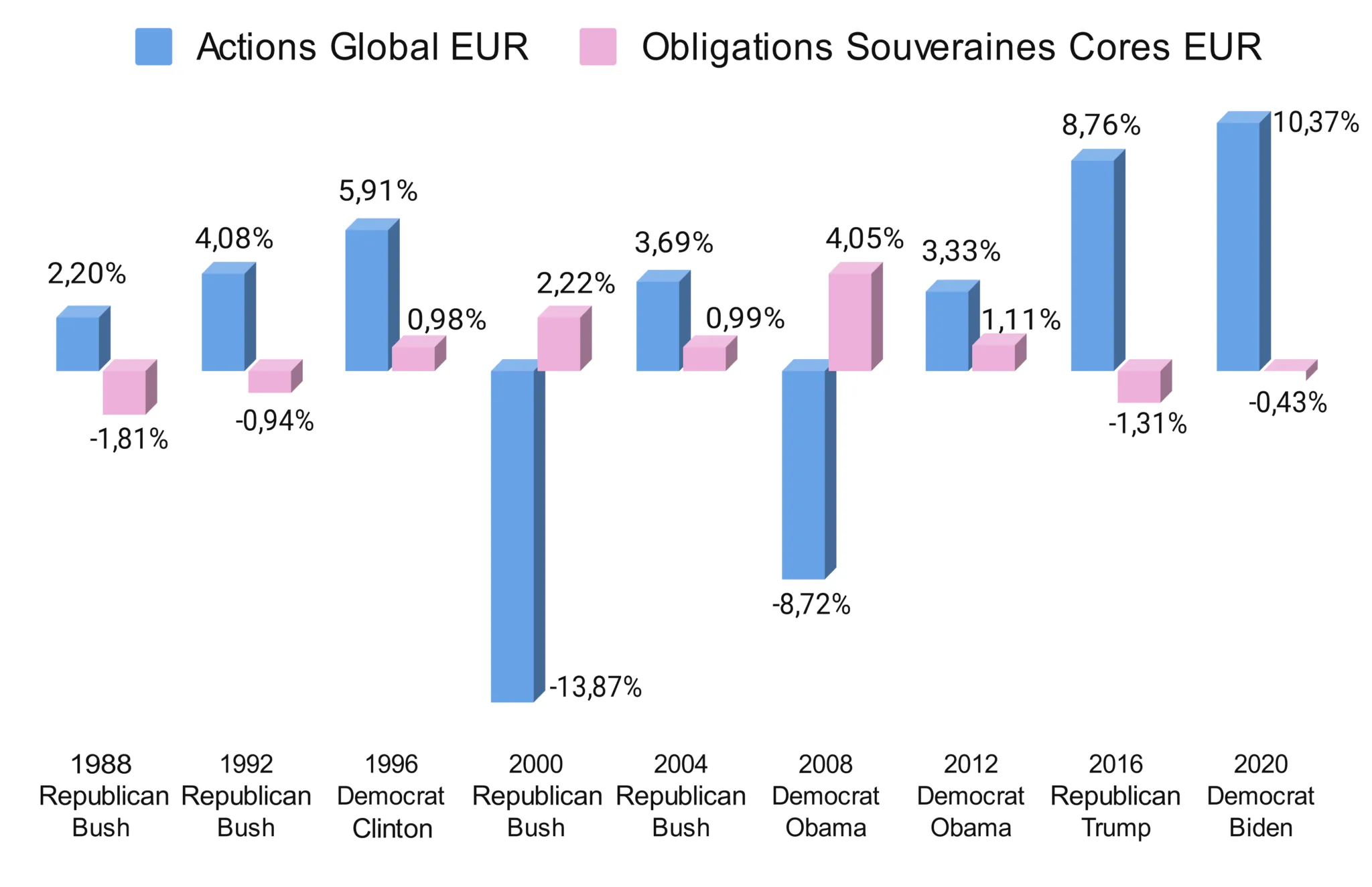
Historically, equities have posted positive returns in the two months following 7 of the last 9 presidential elections.
In contrast, the 2000 and 2008 elections, marked by major economic crises, saw significant declines in equity markets, while sovereign bonds showed moderate but stable performance.
2-Month Post-Election Performance
Explanations
- Dissipation of political uncertainty: The clarification of election results reduces uncertainty, encouraging investors to shift toward riskier assets such as equities.
- Anticipation of economic policies: Promises of economic stimulus, such as tax cuts and infrastructure investments, raise growth expectations and boost market confidence.
- Rising rates and inflation: Electoral promises of expansionary fiscal policy often lead to inflation expectations, prompting portfolio adjustments with preferences for assets that benefit from rising rates.
2. Regional Performance Comparison: European, American, and Emerging Market Equities
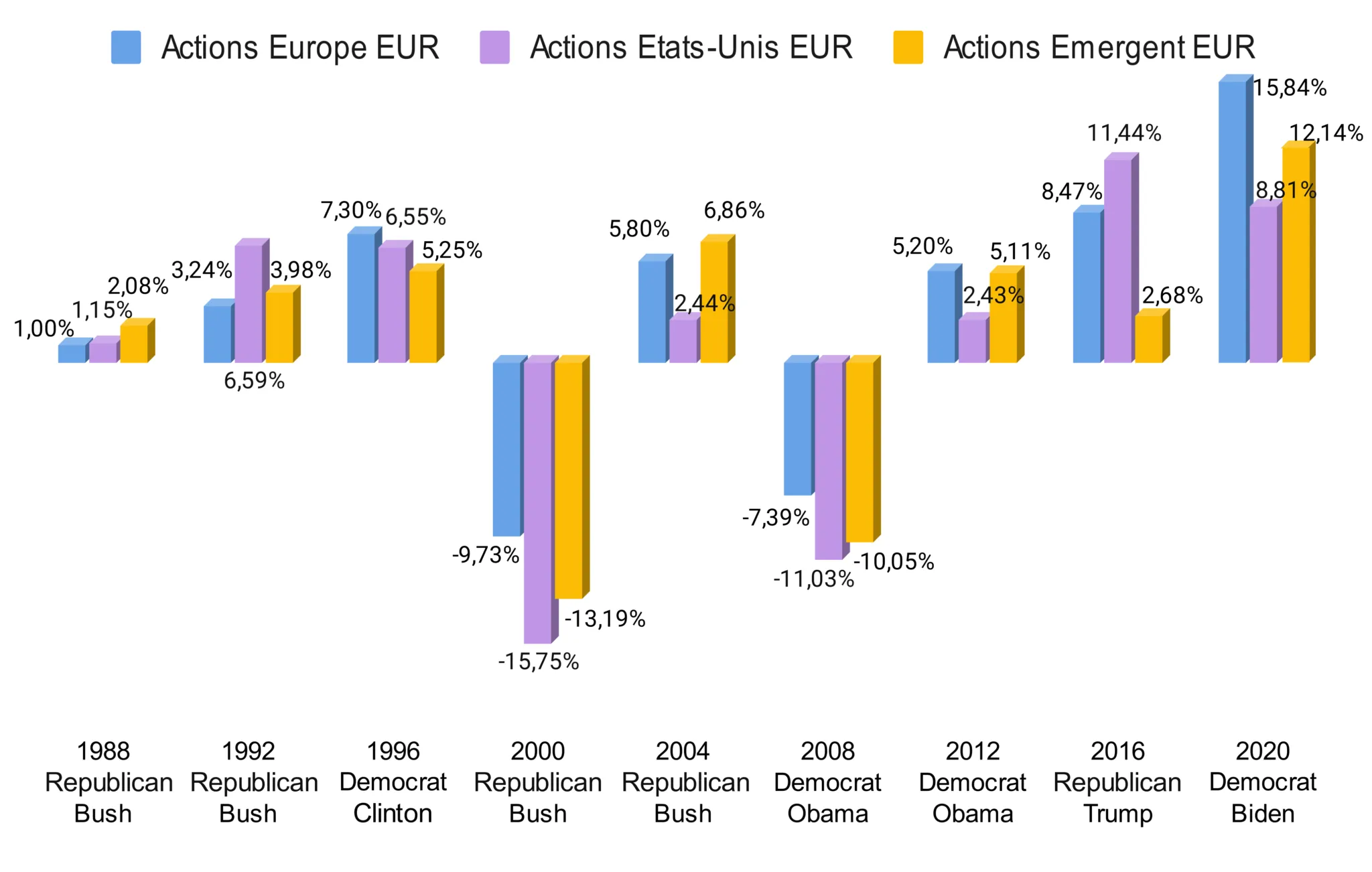
European equities have, in most cases, outperformed American equities after presidential elections. This outperformance can be explained by more attractive valuations in Europe and capital flows seeking opportunities after the lifting of electoral uncertainty in the United States.
Emerging markets, on the other hand, show more volatile performance. They depend on foreign capital flows and are sensitive to dollar fluctuations. A strong dollar often leads to capital outflows from emerging markets, while a depreciation boosts their attractiveness.
2-Month Post-Election Performance
The Role of the EUR/USD Exchange Rate and Currency Volatility
The EUR/USD exchange rate is influenced by US election results. Dollar appreciation can be driven by protectionist economic policies, attracting capital toward safe-haven assets.
Conversely, an administration perceived as favorable to growth and international trade can lead to dollar stabilization and support the euro.
Implications for Europe: A dollar rise due to expansionary US policy is favorable, increasing the competitiveness of European exports. However, if the rise is driven by protectionist policies, the effect can be the opposite and negative for Europe.
3. Does Value Style Outperform Growth Style? Small Caps vs Large Caps?
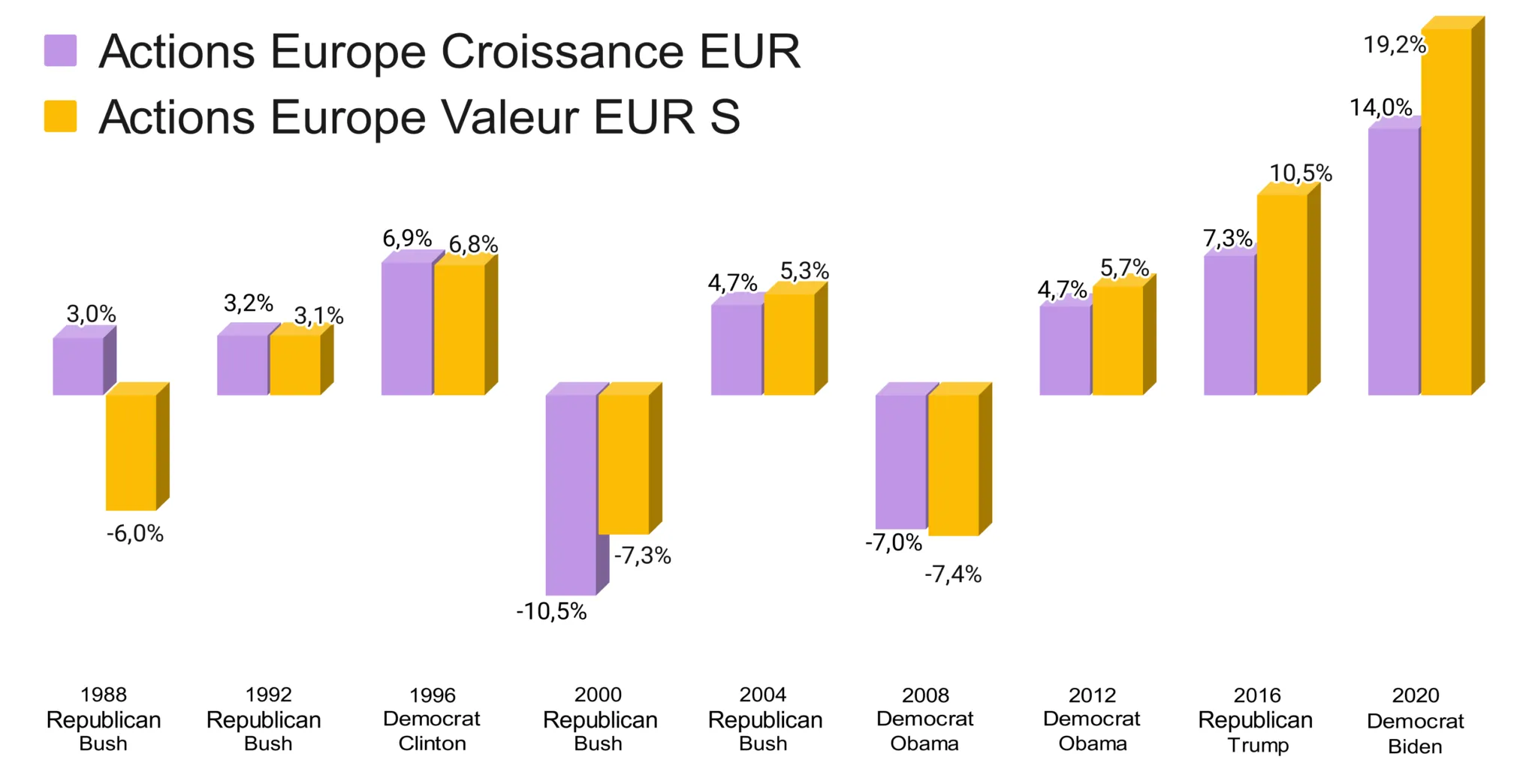
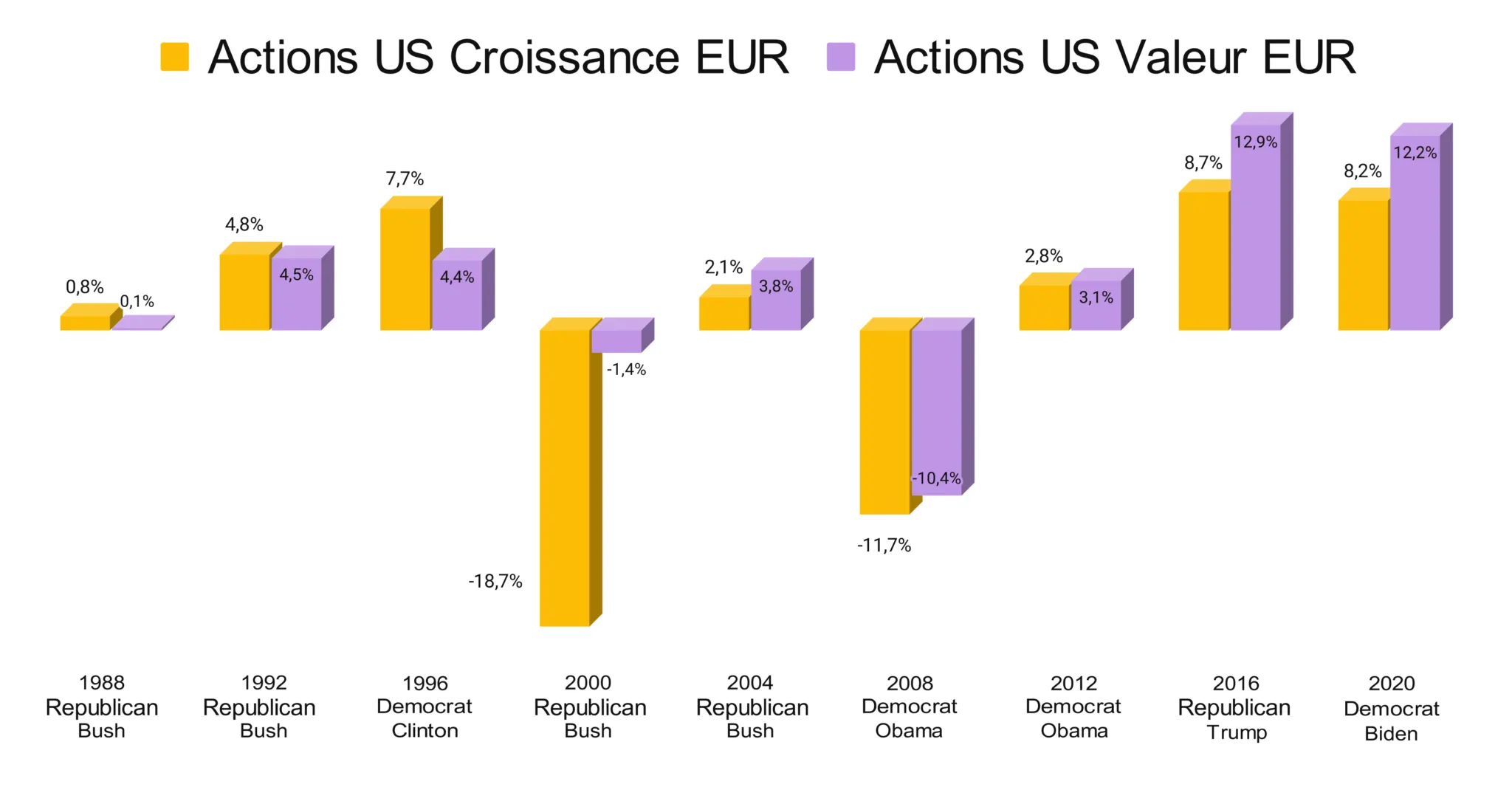
The Value investment style has outperformed Growth in 7 of the last 9 elections. This phenomenon is explained by the sector rotation that favors Value stocks, perceived as undervalued and benefiting from stimulus policies and support for cyclical sectors.
Growth stocks, on the other hand, are more sensitive to expectations of rising long-term rates, which reduce the present value of their future cash flows.
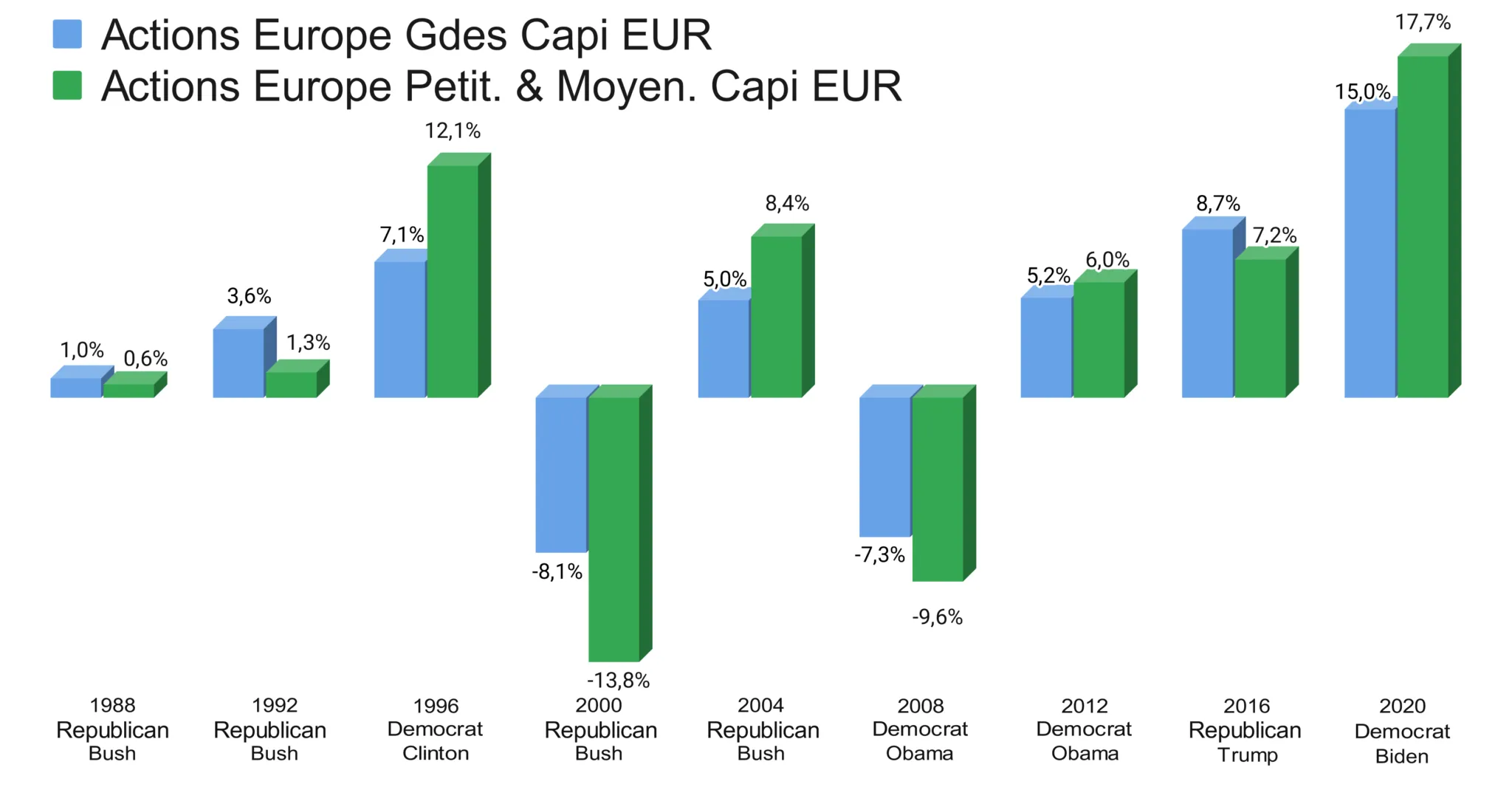
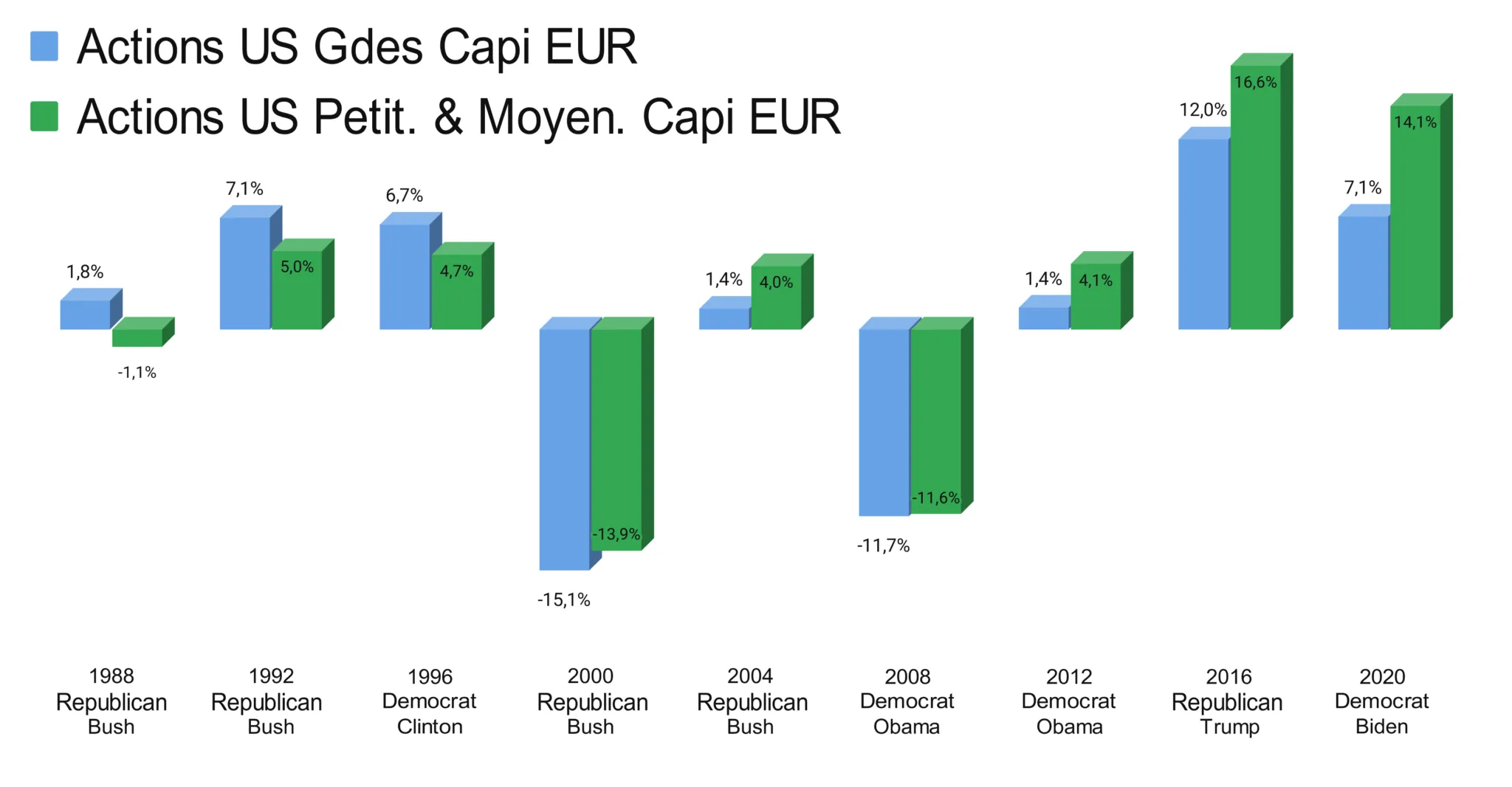
Small and mid-cap stocks often outperform large companies after elections, as they benefit more quickly from new economic support measures and policies favorable to local businesses. Large caps, meanwhile, can be more affected by dollar strength and protectionist trade policies.
2-Month Post-Election Performance
4. Evolution of Electoral Impact Since 2000
The impact of US presidential elections on financial markets has become more pronounced since 2000. Several reasons explain this evolution:
- Increased financial globalization: Market interdependence makes the global economy more sensitive to political changes in the United States.
- Intense media coverage: Massive media coverage amplifies investor reactions and increases volatility.
- Divergent economic policies: Candidates’ economic programs are increasingly polarized, creating uncertainties about the future direction of economic policies.
- Growing weight of fiscal policy: Increased government intervention in economic stimulus, particularly since the 2000 crisis, influences market growth expectations.
Conclusion
US presidential elections have a significant impact on financial markets. Since 1988, data analysis shows that equities often outperform bonds, with notable outperformance in Europe and an advantage for the Value style and small-cap stocks.
Investors should remain vigilant and adapt their strategies based on post-election dynamics and anticipated policies.
These analyses were conducted using the EnvestBoard tool, which enables users to explore financial market scenarios and refine their allocation decisions.
EnvestBoard Rating - 3-Year Outperformance
Each month, funds within the same category are rated based on their 3-year outperformance relative to the category average.
- 5 stars: Top 10% of best-performing funds.
- 4 stars: Next 22.5%.
- 3 stars: Next 35%.
- 2 stars: Next 22.5%.
- 1 star: Bottom 10% of least-performing funds.
About the author: Yufeng Xie is the CEO and co-founder of EnvestBoard, an innovative investment decision-support platform.
Past performance is not indicative of future results. The content above does not constitute investment advice. It is an objective analysis of financial information.