Overview
- Investors preferred growth stocks over this category during low-inflation years.
- During inflationary periods, less indebted companies are less impacted by rising rates on their balance sheets and can take advantage of price increases to repay their debt more quickly.
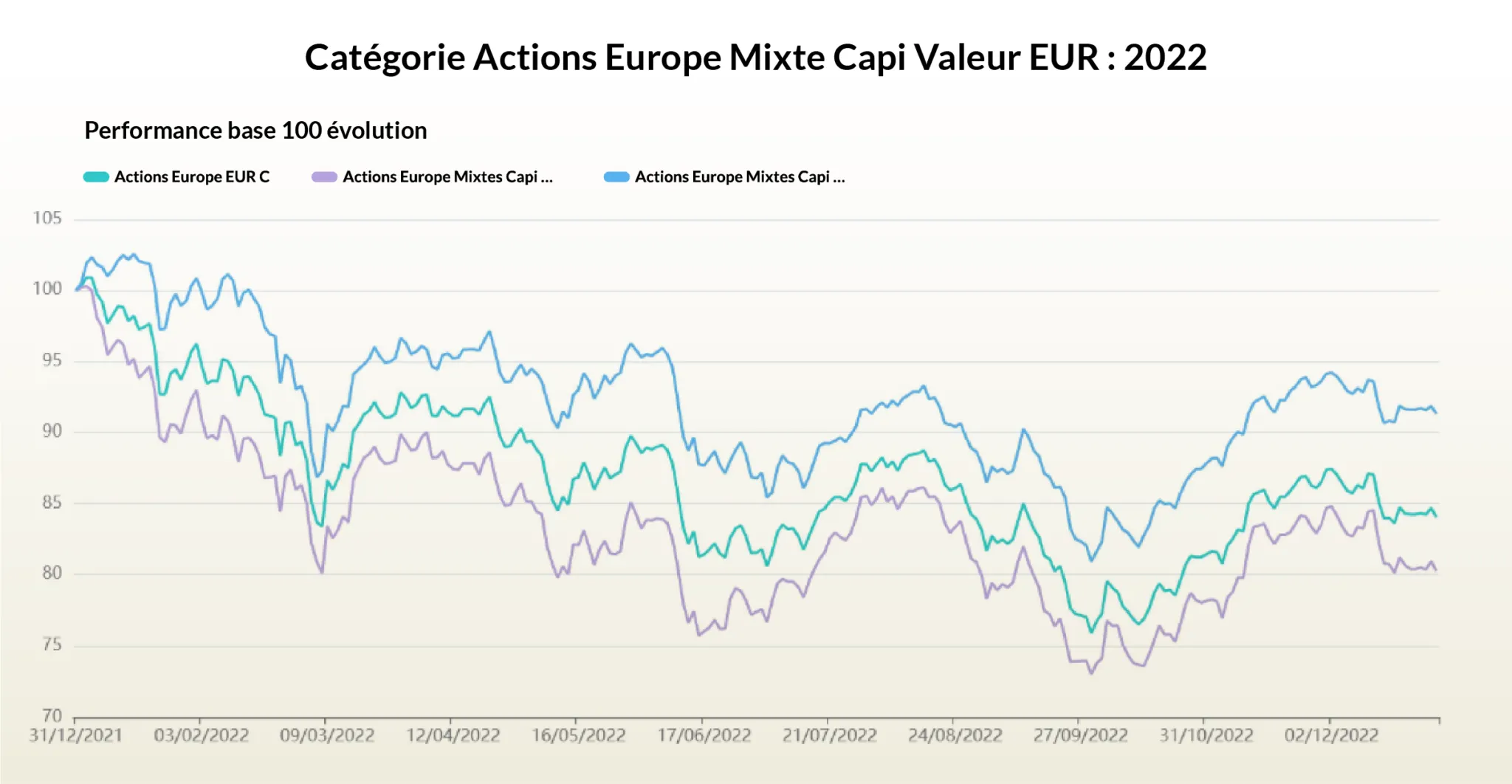
- The value equities category outperformed the European equity market in 2022.
Current Situation
The market is hesitating between two scenarios:
1. Deflationary scenario
In this scenario, inflation becomes decreasing without significant rate hikes, favoring growth stocks.
2. Inflationary scenario
In this scenario, rising inflation requires further rate hikes, favoring value stocks.
Inflation Scenario
Faced with persistently high inflation, strong employment figures, and sustained household consumption, central banks should act to prevent an overheating economy that has a negative long-term impact. In this scenario, companies with healthy balance sheets and resilient business activity will be favored by investors seeking safe and stable assets.
This is the scenario we experienced in 2022 with the Europe mixed growth equities category outperforming the European equities market by 7.3%.
Disinflation Scenario
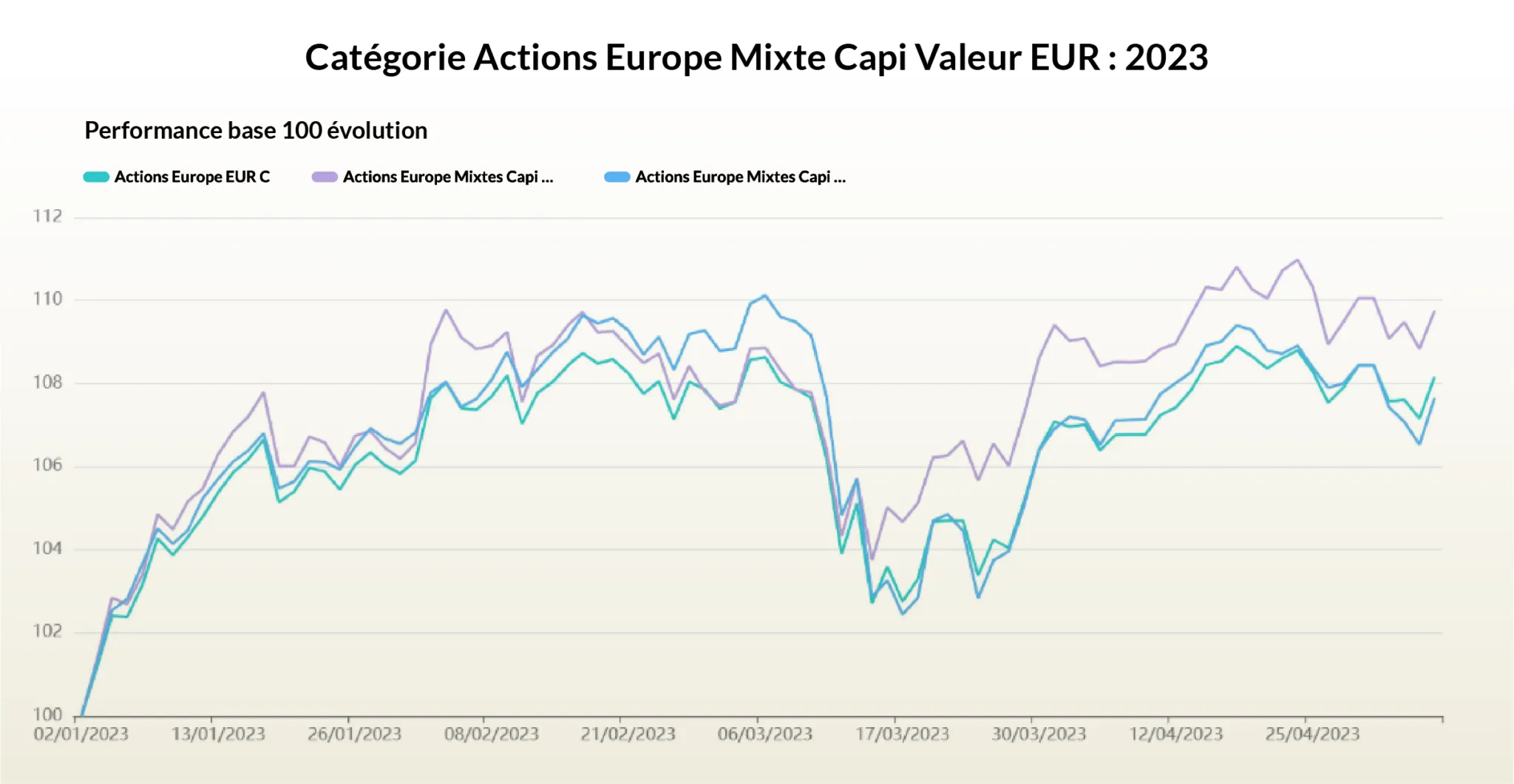
Inflation decreases without further sharp rate hikes. Companies can now finance themselves at rates that allow them to invest significantly and sustainably. In this scenario, the market will favor companies with strong growth potential.
This scenario is the one we experienced for many years before 2022 and could recur as early as 2023 if a recession is avoided.
Past performance does not guarantee future results. Fees are included in performance figures. The content above does not constitute investment advice. It is an objective analysis of financial information.